
The Honest Crate Training Guide: For Puppies, New Rescues, and Adult Dogs (Even in Apartments with Close Neighbors)

Updated: 1 day ago
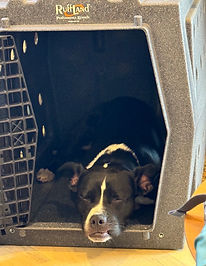
Why Should I Crate Train My Dog?
Crate training is a super valuable skill. There are many times in a dog’s life where they need to be confined away from a situation, and a crate is usually the safest and most practical way to keep a dog secured in one area. If you ever board your dog with a professional, if you ever travel with your dog, or if your dog is injured and on activity rest, making sure your dog is comfortable being in a crate prevents a miserably difficult situation.
For dogs who are a little bit more prone to trouble-making, crating on a regular basis is an easy solution to many behavioral problems. Crate time encourages healthy regular naps, boundaries, and structure in the home. Generally speaking, crate-trained dogs overall have an easier time independently settling and regulating their emotions.
What Are the Best Crate Training Techniques?
The tricky part about writing an honest crate training guide is that sometimes opposite techniques work for different dogs. Any trainer or article telling you to do just one technique is misleading you for the sake of wrapping up naive training philosophy in a pretty bow!
Some dogs are easy to crate train, and some are more challenging. For some dogs, crates feel like a natural safe space, and we can encourage them to “den” in their crate without having too fancy of a training plan. For some dogs, “accepting it” is the best we can hope for, and that’s okay too.
Consider the History: Has Your Dog Had Bad Crate Experiences?
“Bad experiences” can mean two different things here. On one hand, new rescue dogs who have been in the shelter system or who have had a history of neglect sometimes come home with negative crate associations.
On the other hand, a “bad experience” can mean (for the sake of training) that the dog has a history of “failed” crate training where they already learned that when they are crated, it’s time to bark and freak out.
Dogs with a bad crate history often benefit from a crate that looks different than what they experienced before. For example, maybe the dog has only been in a wire crate. A plastic crate or even a wire crate covered in blankets (with some area left open for air flow) might feel different enough that they do not immediately associate the crate with their previous experiences.
Crate Preferences: What Kind of Crate Set Up Does Your Dog Like?
Even without having had a bad experience, dogs have preferences about their crate set up. For example, some dogs like to sleep like the princess and the pea with a soft fluffy bed, many blankets, stuffed toys, etc. Some dogs actually hate this because they run hot or for whatever other reason prefer the cool, hard surface of a crate bottom without a bed.
*Safety note: If your dog is prone to chewing on things and potentially swallowing them, be aware that having access to beds and blankets unsupervised can be a safety risk to your dog.
Some dogs do better in an open wire crate versus a plastic or covered crate. Some dogs like white noise machines or classical music during crate time. Some dogs prefer a larger crate where they can stretch their legs. Some dogs prefer a smaller crate (but not too small) because the limited space helps them settle down and not think about playing.
It can be difficult to experiment with all different kinds of crates, because it can get expensive to purchase all of these options. However, having an awareness of your dog’s crate preferences can be a game changer when crate training.
How Does Separation Anxiety Affect Crate Training?
Separation anxiety refers to a dog panicking when separated from their owners. “Separation anxiety” is also a term that has become overused to the point of being confusing for owners.
Some owners use the term “separation anxiety” when in reality their dog has simply learned to throw a tantrum to get what they want. This can still be stressful for the dog and difficult to deal with, but if the anxiety is caused by a learned history of bad behavior being rewarded, it makes the most sense to approach the behavior modification plan with targeted training exercises.
Some dogs have a deeply ingrained panic response when alone that is more likely to be influenced by genetics and very early life experiences in puppyhood. If a dog is so distressed by separation that their health is affected, it makes sense to work in collaboration with a veterinarian to address the anxiety from a medical lens in addition to training.
True for Almost All Dogs: Exercise Them Beforehand, and Focus On Crate = Nap Time
My primary goal for most dogs is to associate the crate with settling and nap time. For this reason, I schedule crate time after they are exercised and fully enriched.
Crating overnight can be great for the same reason.
*Tip – Transition Activity: Some dogs have trouble transitioning IMMEDIATELY from exercise to being in the crate. In these cases, I often recommend a brief, calming transition activity such as practicing a down-stay. Giving your dog a chew-treat in the crate can also often solve this problem.
True for Most Dogs: Form Positive Associations with the Crate Via Feeding Meals Inside
Part of the reason I love assigning feeding all meals in the crate as homework is that I simply know it will ensure that you are practicing every day. But the formula here is simple. Food = good. Crate = food. Crate = good.
For some families, this practice might mean that you have to rearrange your schedule a little. For example, instead of feeding breakfast, going for a walk, and then crating, you might want to save breakfast until after the walk. Optimize the schedule for your behavior goals!
Often Relevant: Letting A Dog Out When They Fuss and Cry Teaches Them to Fuss and Cry More Often
This is the part of the article where I might start to hurt you.
In 2026, it has become more common to hear the advice to never let your puppy (or baby) “cry it out.” While it is certainly true that you should do what you can in order to minimize emotional distress in the crate, dogs are going to repeat behaviors that work. If crying gets your attention and you let your dog out when they make noise, they are going to make noise more often.
That means that you need to 1) proactively let your dog out before they vocalize or 2) if they’re already vocalizing, wait until they settle before letting them out in order to support your crate training goals. Do some soundproofing with blankets and noise machines, and do some deep breathing. Unless your dog has a longstanding habit of barking in the crate, they should settle down in 1-10 minutes. And then, if you do think they have been crated for too long or need to go to the bathroom etc., you can let them out when they’re calm.
Yes, this does include puppies, not just adult dogs! Many owners let their dog out because they are potty training, but it is better for your plan to focus on proactively letting them outside instead of waiting for them to cry.
There are sometimes moments with puppies and newly adopted dogs where you might need to judge if they are at risk of pottying in the crate. I would personally choose to prioritize potty training over teaching them to not bark, and I would cut my losses. But, in this situation, I would also try to use that information to do better next time with the dog’s schedule.
Don’t JUST Wait Them Out: If your dog is fussing in the crate a lot, you should not rely on waiting them out alone. You need to consider the other training techniques I list here to change their association with the crate.
Don’t Wait Them IN(?): I once had a client that told me she was “waiting her dog out” by waiting five more minutes every day as her dog barked and barked in the crate. This is not waiting the dog OUT. Waiting them out means waiting until they stop. What this client accidentally did was train duration, and her dog became very good at barking with determination for over an hour every morning. Don’t do that!
Depends on the Dog: How Long Should They Go in There
Some dogs need to be introduced to the crate in short and sweet bursts to keep things pleasant. If we’re being extra careful about crate training in order to keep things 100% quiet for neighbors who are so close that they can hear barking, short and sweet is the safest option. But for some dogs, stopping crate sessions at the 5 minute mark actually prevents them from fully settling and taking a nap.
In training, we usually want to gradually increase the challenge, and slow and steady often wins the raise. And yet, in the typical “board and train” program, dogs are often suddenly crated for the majority of the day. This can actually have the effect of “ripping the bandaid off,” and dogs can become crate trained very quickly when immersed in this structure – assuming, of course, that the trainer is also very thoroughly exercising the dog and meeting all of their enrichment and socialization needs. For some dogs, though, this is overwhelming and too stressful.
In private lessons, I use the information of history, age, temperament/personality, and training background to recommend how much time the dog should spend in the crate. If you are crate training on your own, it might take some experimenting to figure out what your dog does best with. For many dogs, the length of a nap is a great first goal.
Train with Caution: Crate Games
Some dogs benefit immensely from crate training being made into a “game” by practicing repeatedly sending them into the crate for a food reward. Similarly, some dogs settle better in the crate with an exercise that feels like a down-stay, where the handler calmly rewards the dog in the crate for settling.
Susan Garrett popularized the term “crate games,” and you should absolutely check out this very dated and funny promotional video about it.
The danger of crate games for some dogs is that the crate can become too exciting and too much about interacting with the handler, and it becomes difficult to transition to the crate being an exercise about independent relaxing, without handler attention.
Additionally, if your timing is bad and you (God forbid) inadvertently reward the dog for fussing and barking during crate games, you could be in big trouble. For this reason, I mostly only use “crate games” with clients if other techniques are not working.
Depends on the Dog: To Choose or to Not Choose
While most dogs benefit from having the option to nap in the crate with the door open throughout the day, it does depend on the dog if you should “follow their lead” more than that. For some dogs, feeling autonomous is very important for them to feel comfortable. This could mean that when you send your dog to the crate, you wait nearby for the dog to “offer” walking in themselves.
For some dogs, too much choice leads to overthinking and/or tomfoolery. For these types, leading them into the crate by the collar instead of waiting for them to walk in by themselves ultimately reduces conflict and drama. The message is something like, “Hey this is happening, so instead of protesting, you can skip ahead to coping!”
Depends on the Dog: Alone or Not-Alone
To be considered completely crate trained, a dog eventually needs to cope with being crated in an empty room/house, as well as coping with the crate even if there are people nearby. But which scenario is naturally harder depends on the dog.
Some dogs find comfort in knowing their human is nearby while they are in the crate, and we fade the human out of the picture gradually. But other dogs are actually too excited and tempted by the potential of attention from that human, and they have a harder time settling. For those dogs, we want to start with the human gone and gradually work up to the dog remaining calm and settled even with the human there.
For dogs who do better when alone, utilizing crate covers and noise machines is typically helpful.
When They’re Alone: Cameras and Baby Monitors
Utilizing cameras, baby monitor devices, and/or phone apps is a smart way to ensure your dog is staying calm in the crate even when you aren’t there. Better to check in on them yourself instead of getting an angry note from your neighbor!
If you don’t have a device like this, though, you can often tell by the dog’s behavior when you return how they were doing while you were gone. If they are sitting in a pile of their own stress-induced drool, that’s a bad sign. But if you come home and hear your dog stretching as they wake up, and they walk groggily out of the crate, you can probably guess that they were napping nicely while you were away.
Troubleshooting: Learning to Settle and Not Demand Attention Outside of the Crate
If you’re feeling stuck while crate training, sometimes the key is to work on the skill of settling and/or not demanding attention when outside of the crate. Teaching a calm “go to your bed” behavior and working on polite manners in general can be hugely beneficial to a dog’s behavior while confined.
Additionally, if a dog is having trouble with crate training, I will often have handlers practice “tethering.” This can mean a person holding the leash short with the goal of having the dog settle – for example, maybe you are on a walk and sit on a bench, hold your leash short, and work on your dog calmly lying down instead of yanking on the leash and looking for entertainment options. “Tethering” can also mean tying your leash somewhere in your house so that your dog is stuck in one spot and settles down. Dealing with boredom and physical restraint is an imperative skill for a pet dog, and that’s the name of the game for crate training and tethering.
*Safety note: Dogs should not be left tethered unsupervised, because they can get tangled in the leash and choke themselves.
Troubleshooting: Bark Collars for Pastime Barkers
Bark collars can be traumatizing for some dogs, and I would strongly prefer you not use an article online to decide if you are going to buy one or not. However, since it is possible that someone will use this article to decide if they should use a bark collar, I will tell you about my thoughts and experiences with them.
I do not recommend bark collars as a first option. I do not recommend them for dogs who are generally sensitive or anxious, and I do not recommend using them for dogs who are mostly barking because they are hearing noises and alerting to them.
Some dogs have an established habit of barking as a pastime and seem hardwired to basically love the sound of their own voice. I have seen bark collars actually seem to “magically” fix nuisance/demand barking in the crate, and with barking off the table, the dog learns to settle. In these cases, I recommend using a high-quality bark collar with at least 10 levels to choose from, and it should count the number of times correction was given so that you can ensure it is working effectively. (Meaning after the first week or so, that number should mostly be 0!) But I do not recommend choosing a bark collar for crate training without guidance from a professional.
Build a Routine: Crate Training Is Not Fun, But That’s the Point
A lot of dog training can be exciting: building a relationship and enthusiasm for training, getting your dog to come when called at the park, or teaching a new trick. Crate training lacks the glamor and entertainment of skill-based training. And that’s what’s hard about it for some dogs! But coping with boredom and knowing how to relax is just as important as obedience skills like sit, down, and heel. Thus, finding a way to build your crate training practice into your regular schedule is crucial to success. Now get out there and train that doggy!
-
Venus and Mars K9 provides in-home private dog training and group class for basic obedience, puppy socialization, trick training, dog sport foundations, leash reactivity training, and other canine behavior problems. We travel most frequently to neighborhoods such as Humboldt Park, Hermosa, Logan Square, Avondale, West Town, South Loop, Downtown Chicago, Ukrainian Village, Bucktown, Wicker Park, East Garfield Park, Fulton Market, North Center, Lincoln Park, Lakeview, Roscoe Village, Irving Park, Portage Park, Oak Park, River Forest, Forest Park, Pilsen, and Bridgeport.


Comments