
Rescue Dogs: How Long Should My Dog Be Considered "Newly Adopted?"


Newly Adopted Rescue Dog Timelines
Most new adopters are given information about the “3-3-3 rule,” which is a guideline used to help people understand how long it takes dogs to fully decompress after adoption:
First 3 Days: Pets may be stressed and overwhelmed, possibly showing anxiety or fear. The best ways to help them include:
Get into a routine.
Be patient and stay positive.
Stay calm and give clear direction (including setting boundaries).
Give them time to observe their new home and co-habitants, including giving them space and not forcing interactions.
Next 3 Weeks: Pets start to settle in. Less stress will help us experience more of their personality (outside of their stress-related coping mechanisms) as they become more comfortable.
Work on basic training (sit, come, wait, etc.).
Positively reinforce every success.
Give calm, clear directions and maintain set boundaries.
Stay consistent if the pet starts to test boundaries.
First 3 Months: Pets are further adjusted to new surroundings, people, and animals. They begin to trust, showing their true personalities and integrating into the household.
Understand their routine and expectations.
Bond develops.
Keep up with training.
Establish habits.
Life May Still Feel New After 3 Months
The 3-3-3 rule ends with the idea that a newly adopted rescue dog generally settles into their new life and shows their true colors by the time the 3 month mark rolls around. That being said, there are some factors that can keep a rescue dog's "new life" feeling new and surprising for longer than expected.
You may wonder, before adoption, had your dog ever:
Been walked on a leash before?
Been inside a house?
Been expected to potty outside?
Gone outside their home property?
Taken treats from a new person?
Met another dog?
Played with anyone besides themselves?
Seen bikes, scooters, or rollerblades?
Heard loud traffic noises?
Heard fireworks?
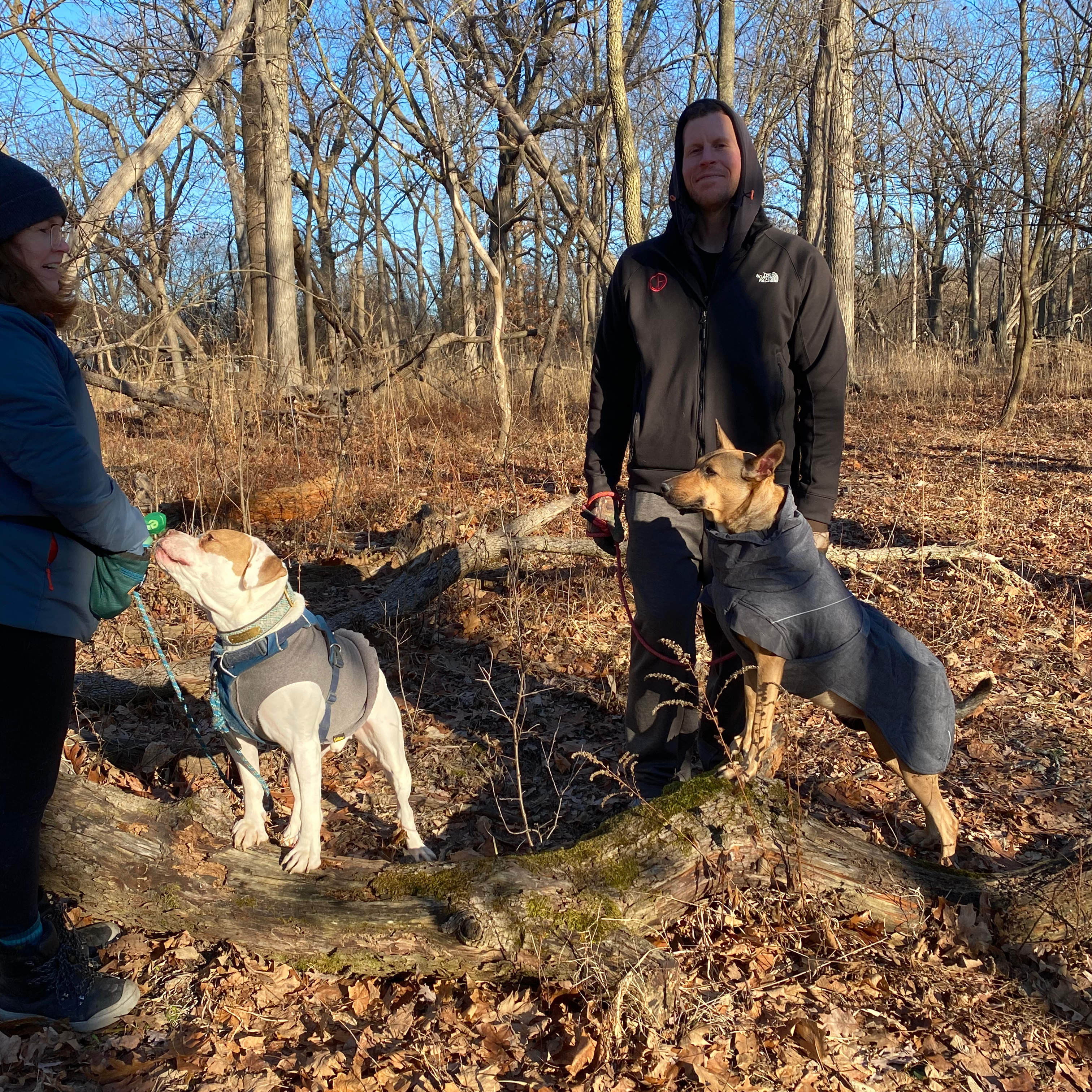
For example, I adopted my own rescue dog Mars when she was 9 months old. She grew up in rural Missouri and was rehomed because her family could no longer care for her. When I adopted her, she was terrified of loud traffic noises and city bus brakes hissing. I had to carry her home on more than one occasion. She also took a long time to learn how to potty outside and preferred to sneak down my long hallway and pee in private. It took longer than 3 months for these issues to resolve, but she did eventually get over her fear of buses and traffic noises, and she did learn to be fully housebroken.
What Are Signs that Your Dog Is Still Adjusting?
It can be difficult to tell in the moment if a dog is behaving in a certain way because they:
Are still adjusting to their new life
Vs.
Have learned “bad habits” in the shelter system (barking, leash biting, pottying inside)
Vs.
Are showing the “true colors” of their personality/temperment
Oftentimes, the answer only becomes obvious in retrospect! For this reason, with new rescues in particular, we practice patience, compassion, and a cautious benefit of the doubt.
Here are some “classic” signs of stress. Again, for a newly adopted dog, it’s not always possible to determine if this stress is because they are still adjusting, as opposed to stress caused by a more permanent anxiety, phobia, etc.:
Slightly rounded back: You dog’s back legs are slightly bent so that their hind end is lower than their front. Their ears point backwards and their tail is generally low.
Very rounded back: Your dog’s weight is thrown backwards OR they are holding themselves very low to the ground. Their legs are bent and their head, low. Their ears point backwards and their tail is between their legs.
Licking their muzzle: Your dog is constantly licking their muzzle.
Panting: Your dog is breathing rapidly with their tongue out and seems to be hyperventilating for no obvious reason (i.e., they haven’t been running or it isn’t particularly hot out).
Moving excessively: Your dog is running around in circles or pacing quickly and you’re not sure why.
Yawning: Your dog is yawning for no apparent reason.
Refusing to eat: Your dog isn’t eating and is even refusing the treats they normally enjoy.
Moving very slowly: Your dog seems lethargic and is moving very slowly.
Scowling: Your dog looks like they’re frowning, with wrinkles on their forehead.
Being hypervigilant: Your dog is jumpy and reacting to every noise or movement. They are alert and unable to relax. If they are very tired, they’ll nod off and wake up with a start, as if they are afraid to have missed something.
Pulling away: Your dog will shy away from a situation and won’t try to go back.
Raised foreleg: Your dog lifts one or the other foreleg, which is pointed toward the body.
Whale eyes: Your dog looks away, showing the whites of their eyes. This sign of stress may be more difficult to observe in some dogs who have bulgy eyes, but it you’ll notice it if you compare to what the white of their eyes usually looks like.
“Excessive” play (See below)
If your dog is showing a lot of signs of stress, and/or you are struggling with their behavior, I highly recommend consulting with a professional to help make a plan that sets them up for success.
Play and Energy Levels
A less-talked-about sign of stress can be play: mouthing, jumping, body slamming, wrestling, running/”getting the zoomies,” playing tug, etc. Of course, some dogs play because they are happy and simply love to play. Some dogs have high energy, and play is an important energy outlet.
But play can also be used to release stress from the body. For this reason, a newly adopted dog may sometimes appear “higher energy” than they actually turn out to be. We help these newly adopted dogs regulate by providing appropriate play outlets:
Toys for the dog to play with by themselves
Toys for the dog to play fetch or tug with their humans
Appropriate “shreddables” like cardboard boxes
Structured time to be silly and run with owners
We also help them calm down to prevent over-stimulation with:
Opportunities to calm themselves via sniffing (such as giving them time to smell grass and bushes, or hiding treats outside or in the house for them to sniff out)
Calm chewing items like breed/size appropriate bones and chew toys (Learn about resource guarding here)
Structured nap time alone/in a crate
Calm training exercises like teaching a dog to lie down and settle on a bed (“place”)
Calmly stopping “inappropriate outbursts” like jumping on people, play biting etc.

In Conclusion
We don't always have the luxury of knowing our dog's backstory, and rescue dogs sometimes go through many “phases” of behavior right after adoption. These fast-paced changes in behavior can sometimes be alarming and concerning to new owners. Hopefully this article helps you understand why this happens, as well as what we can do to help our newly adopted dogs.
-
Venus and Mars K9 provides in-home private dog training and group class for basic obedience, puppy socialization, trick training, dog sport foundations, leash reactivity training, and other canine behavior problems. We travel most frequently to neighborhoods such as Humboldt Park, Hermosa, Logan Square, Avondale, West Town, South Loop, Downtown Chicago, Ukrainian Village, Bucktown, Wicker Park, East Garfield Park, Fulton Market, North Center, Lincoln Park, Lakeview, Roscoe Village, Irving Park, Portage Park, Oak Park, River Forest, Forest Park, Pilsen, and Bridgeport.


Comments